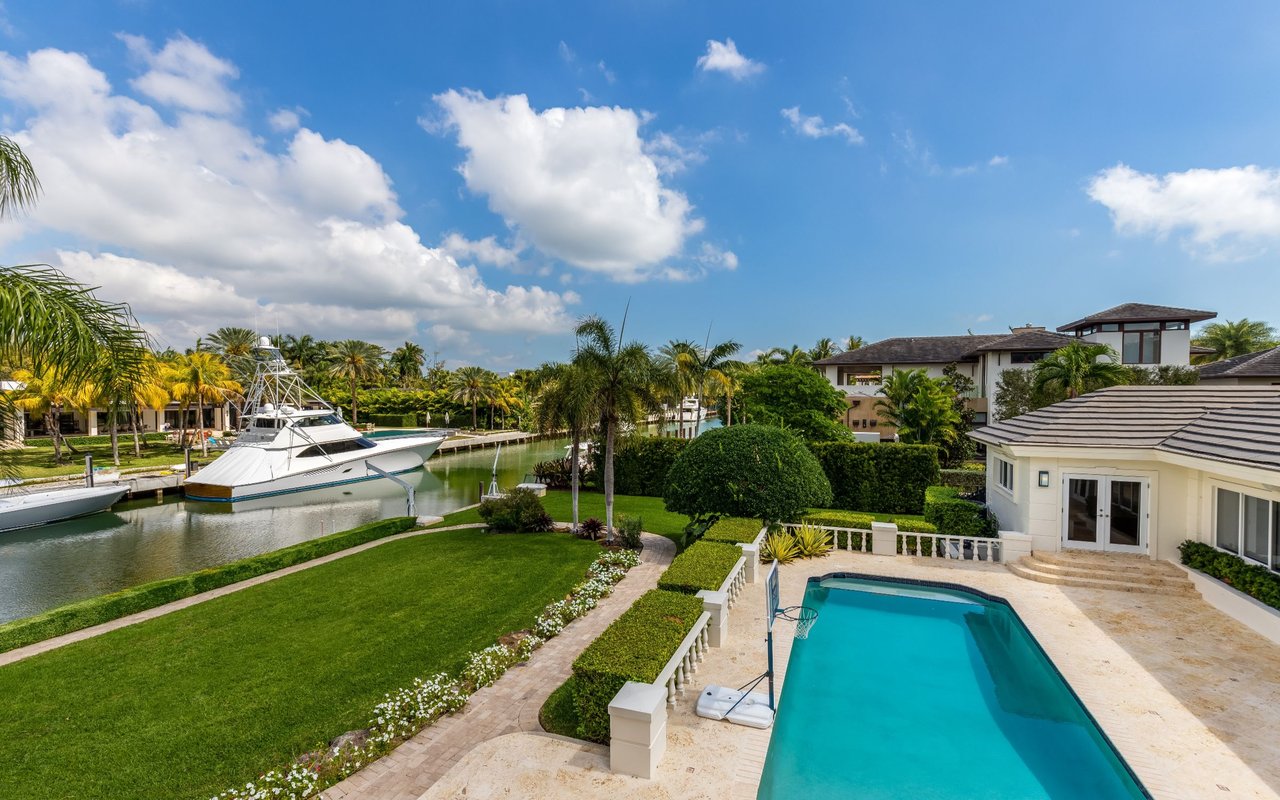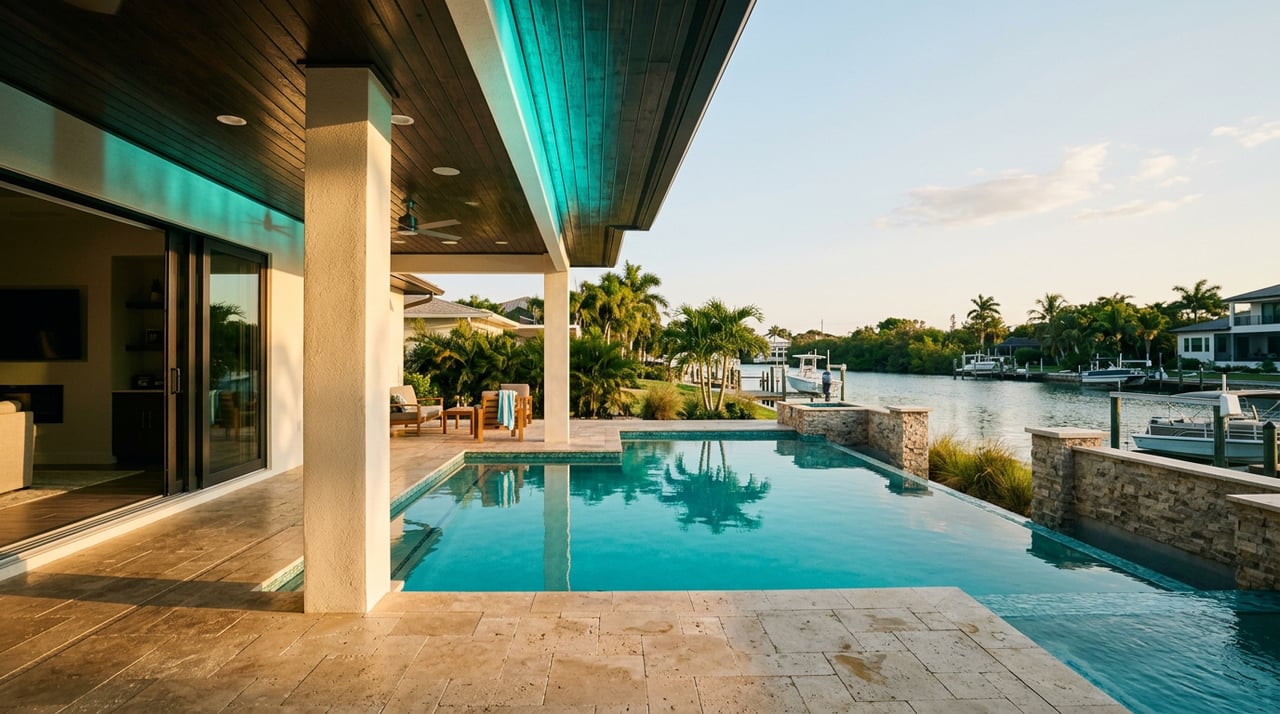
Two listings land in an investor's inbox on the same afternoon. Both are bayfront, both walk to Ringling Causeway, both price in the low seven figures with a dock out back. One sits on Bird Key. The other sits on St. Armands. On paper, they read like the same purchase with a different mailing address.
They are not. The photos won't tell you why. The listing sheet won't either. The difference lives in a homeowners association covenant that most buyers never ask to see until they've already made an offer.
Same Overlay District, Two Different Rulebooks
Bird Key and St. Armands both fall inside the City of Sarasota's Coastal Islands Overlay District, the zoning designation that also covers Lido Key, Coon Key, Otter Key, and portions of Siesta Key. The city adopted the overlay's vacation rental framework through Ordinance 21-5353 in May 2021 and later expanded registration requirements citywide through Ordinance 24-5506 in February 2024. Under that framework, the city allows short-term vacation rentals with a minimum stay of seven nights, provided the owner registers the property and names a responsible party who can respond on site within an hour.
Read only the city code and Bird Key and St. Armands look identical. A buyer comparing the two on rental potential alone would have no reason to treat them differently.
The city code isn't the only rulebook on the island.
Where the HOA Overrides the City
Bird Key is governed by an active homeowners association, and where the HOA's covenants are stricter than city code, the HOA controls. The Bird Key Homeowners Association's lease requirements set a minimum stay of 60 continuous days and cap each dwelling at two leases per calendar year. An owner who wants to lease the property at all must submit a signed lease and a nonrefundable $600 fee before a tenant moves in. Weekly or nightly bookings, the kind the city ordinance technically permits, don't clear the HOA's bar. In practice, the covenant closes the door the city left open.
St. Armands has no comparable HOA layer. Individual buildings may carry their own condo rules, but the key itself carries no association-wide restriction beyond the city's seven-night minimum and registration process. Local brokerage reporting on the St. Armands market this year has described leases running as short as one week, up to 52 times annually, the practical ceiling under the city's own rules rather than any private covenant on top of it.
So the same zoning district produces two outcomes. A Bird Key owner who wants short-term rental income is looking at, at most, two leases a year of two months or longer. A St. Armands owner working under the same city ordinance can lease weekly, all year, if the property and the market support it. Same overlay district. Same seven-night city minimum. One island lets you use it and one doesn't.
This is the kind of detail that never shows up in a comp sheet, because comp sheets track sale price, not use rights.
What the Slow Clock on St. Armands Is Actually Measuring
St. Armands' market numbers this year read like a neighborhood in no hurry. Redfin's luxury segment data for St. Armands as of April 2026 showed 24 luxury listings at a median list price of $3.04 million, with homes sitting a median of 121 days before going under contract. A separate market update circulating in mid-2026 put total active inventory at just 27 listings with a 100-day median time on market, citing Realtor.com data from early in the year.
Days on market that long can read as a soft market. It isn't automatically that. On an island with fewer than 30 active listings at any given moment, a handful of unusually patient sellers or a few architecturally distinctive homes waiting for the right buyer can stretch the median without saying anything about broader demand. Thin inventory produces noisy statistics, and a 100-day median built on two dozen sales moves very differently than the same median built on two thousand.
What the slow clock does confirm is that St. Armands isn't a churn market. Sellers aren't racing to unload inventory, and the small number of transactions each month means a single well-priced or oddly priced sale can swing the median in ways that wouldn't register in a larger submarket.
The scarcity story gets reinforced from the supply side as well. Kathleen Wingate, a global real estate advisor with Premier Sotheby's International Realty who listed a $8.6 million contemporary compound on St. Armands earlier this year, put it directly when describing the market to trade press:
"St. Armands remains one of Sarasota's most tightly held coastal neighborhoods, where opportunities for newer construction are increasingly limited."
Tightly held and slow moving aren't contradictory descriptions of the same market. They're two sides of a supply problem. There isn't much land left to build on, and what does trade doesn't trade often.
What This Actually Changes for a Buyer
None of this argues that Bird Key is the weaker purchase. Bird Key's HOA exists because the roughly 100 homeowners on the island have chosen to prioritize a quiet, owner-occupied character over rental flexibility, and that choice shows up in the island's HOA dues, which run in the range of $4,000 to $5,000 a year to fund the private feel the covenant protects. For a buyer whose plan is to live there full time or use the home as a family retreat with occasional long-term tenants, the 60-day minimum is irrelevant. It's a non-issue that happens to also keep the island quieter.
The problem shows up for a specific buyer profile: someone running the numbers on a St. Armands-adjacent purchase who assumes the rental math is portable across the bay. If the pro forma depends on weekly turnover, that plan works on St. Armands and does not work on Bird Key, regardless of how similar the two properties look in a listing photo. The gap isn't in the price. It's in what the deed and the covenant let you do with the property once you own it.
This is exactly the kind of detail worth confirming before a contract is written, not after. HOA lease applications, fee schedules, and minimum-stay requirements are documents a buyer's agent should be pulling and reading line by line, not summarizing from a listing description. The same goes for verifying that a given address actually sits inside a registered, compliant status with the City of Sarasota's vacation rental registration program before assuming a certificate transfers with the sale. It doesn't. A new owner has to apply for their own certificate, even on a property that was previously registered.
Frequently Asked Questions
Does the Bird Key HOA restriction apply to long-term tenants too? No. Long-term leases are permitted on Bird Key, they simply have to comply with the HOA's guidelines and, per the covenant, run a minimum of 60 days.
Is St. Armands' rental flexibility unique among Sarasota's bay islands? Not entirely. The Coastal Islands Overlay District's seven-night city minimum applies broadly, but individual HOAs and condo associations layer their own restrictions on top of it island by island. St. Armands' lack of a governing HOA is what leaves the city's baseline rule intact, rather than something unique to its zoning.
Does a slower median days-on-market number on St. Armands mean prices are falling? Not necessarily. With inventory as thin as two to three dozen active listings, a single unusually priced sale can swing a percentage-change statistic without reflecting a broader trend. Treat any single-quarter median swing on a small island as a data point to investigate, not a verdict.
Can a Bird Key buyer petition the HOA to change the lease rules? That would require action from the Bird Key Homeowners Association itself, and the covenant is designed to be difficult to unwind for exactly that reason. A buyer should assume the current lease terms are the terms for the foreseeable future rather than plan around a change.
If you're comparing waterfront properties across Sarasota's bay islands and want to know what a specific deed restriction, HOA covenant, or city registration status actually allows before you write an offer, Coastal Reserve can walk the fine print with you. Request a confidential consultation and get the answer in writing, not in a listing description.